Our Kitchen Felt Bigger Without Knocking Down a Single Wall
There are certain seasons in life when a room suddenly feels different, even though nothing physical has changed. For me, it happened right after our second baby arrived. I was standing in the kitchen one morning, holding the baby on my hip while trying to get breakfast ready for our older daughter, and the room…
There are certain seasons in life when a room suddenly feels different, even though nothing physical has changed. For me, it happened right after our second baby arrived.
I was standing in the kitchen one morning, holding the baby on my hip while trying to get breakfast ready for our older daughter, and the room felt smaller than ever.
It wasn’t just the busyness of the morning or the toys scattered on the floor. It was the way the cabinets seemed to close in around me, the way our counters disappeared under bottles and snacks, and how Milo kept bumping into my legs because he couldn’t find enough space to turn around without knocking into something.
Our kitchen is not tiny, but at 10 by 12 feet, it is far from spacious. The layout didn’t help either. The refrigerator sat right beside the entrance, creating a pinch point every time someone tried to walk in while I was grabbing ingredients.
Also, the cabinet doors opened outward in a way that blocked movement, and the lower drawers stuck out so far that once opened, nobody could walk past them. The counters were broken into small, uneven sections by appliances and walls, making prep work feel cramped.
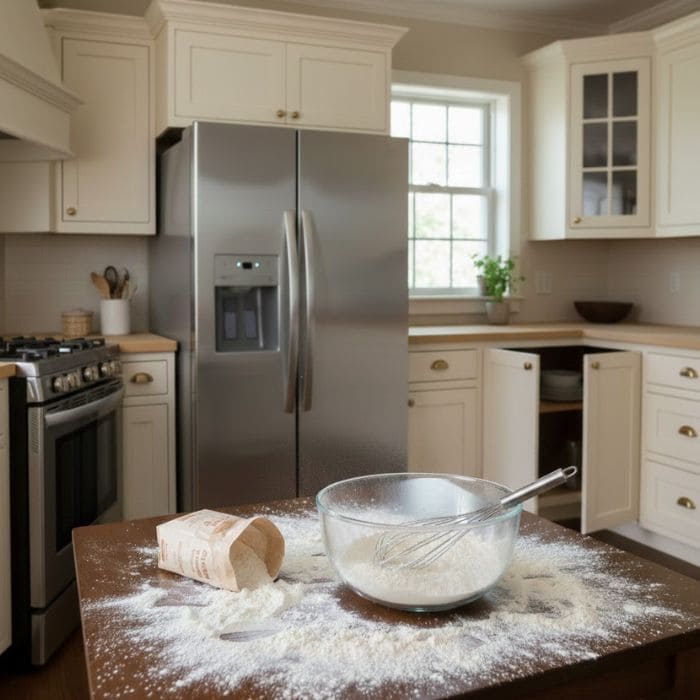
I remember one day trying to bake muffins while both girls were in the kitchen with me.
I reached for the mixing bowl, the baby reached for the whisk, my older daughter reached for the flour, and Milo reached for anything he thought might fall. It felt like a crowded train compartment rather than the heart of our home.
What Our Old Kitchen Looked Like
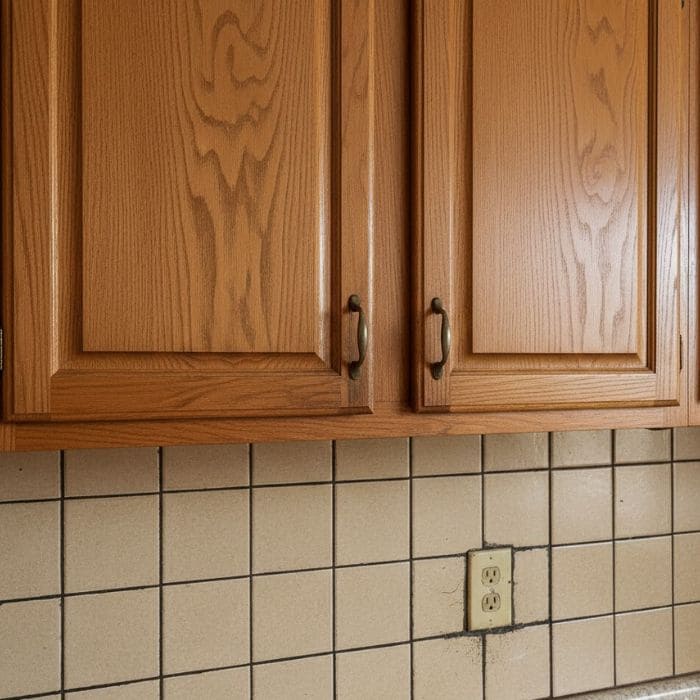
Before we made any updates, the kitchen had a layout that made sense on paper but not in daily life. The cabinets were a medium oak color that made the room feel darker, especially on cloudy days.
The backsplash was a dated beige tile with dark grout that collected crumbs no matter how often I wiped it. Above the sink was a small window that let in light, but the upper cabinets on both sides boxed it in so tightly that the light barely spread across the room.
The countertops were segmented by two corners, creating awkward little workspaces instead of one open area.The microwave sat in a bulky space above the range, sticking out farther than anything else, and because of that, the vent hood didn’t work as well as it should have.
The refrigerator, which we chose simply because it was on sale, was deeper than the space allowed, so it jutted out into the walkway, making it hard to pass through when the door opened.
I didn’t think it was an ugly kitchen, it just wasn’t a functional one for a growing family with a dog who followed me everywhere. And as the kids grew and Milo got more curious, the room felt tighter each month.
When We Realized Something Had to Change
One evening, after a long day of juggling meals and school routines, I told my husband, Daniel, that the kitchen was starting to feel like the most stressful room in the house.
He laughed gently and said he felt the same way every time he tried to grab ice from the freezer while the girls were standing nearby. We both knew a full renovation wasn’t an option – not financially, and not emotionally.
So we sat together one night, scrolling through home design ideas online, saving pictures of small kitchens that somehow looked bigger than ours. I noticed that many of these kitchens just relied on smarter layout choices, lighter colors, and better flow.
The First Change: Creating an Open Feeling With Color
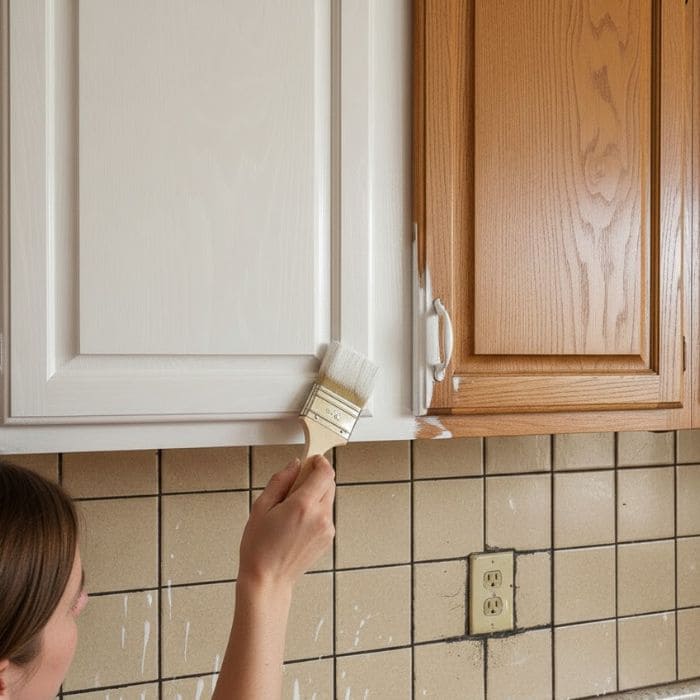
The heavy oak made the room feel closed-in, so we repainted them in a warm, soft white that reflected the natural light from the window.
We also replaced the beige backsplash with a simple white tile that blended with the cabinets rather than fighting for attention. The new grout color was lighter too, which helped make the wall feel continuous rather than broken into small blocks.
Removing What We Didn’t Need
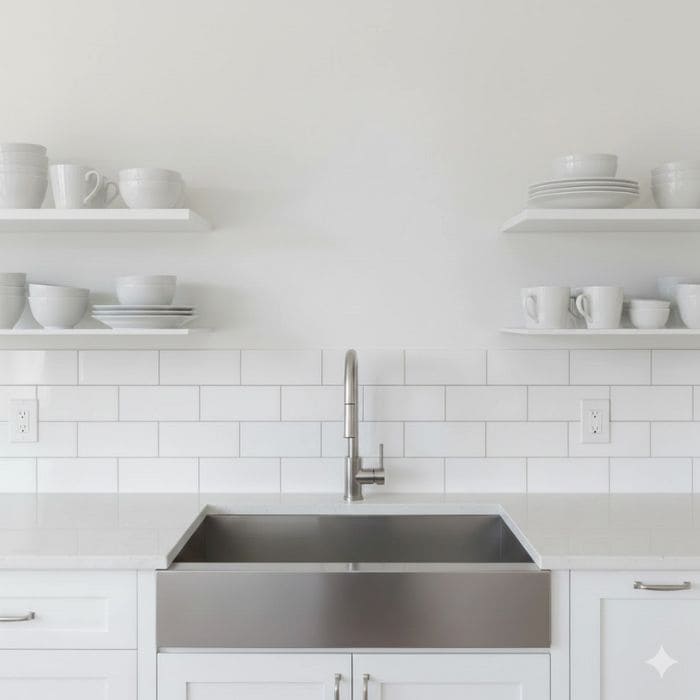
Another change that made a big difference was removing two upper cabinets beside the sink.
I had resisted this idea for years because I worried about losing storage space, but once they were gone, the room gained an openness I didn’t know it needed. The window no longer felt squeezed, and the light spread further across the room, making the entire kitchen feel wider.
We replaced those cabinets with two open shelves that hold only the items we use daily such as some plates, cups, and a few small bowls.
Reworking the Layout Without Moving Walls
Instead of replacing all the appliances, we simply repositioned one of them. The refrigerator, which used to block the entrance, was moved to the opposite wall where we created a small nook just for it.
This opened the walkway and made it easier to move through the kitchen, especially during busy mornings when all four of us seemed to end up in the same spot.
We also swapped out the bulky microwave above the range for a slimmer hood fan, allowing more overhead space and improving the sightline across the kitchen. This alone made the room feel taller.
Adding More Space Without Adding More Space
We introduced a rolling cart that fit snugly beside the pantry door. This gave me extra counter space for prep work, and when I don’t need it, I simply roll it to a different corner. It became the little helper I didn’t know I needed.
We also placed a long, narrow rug across the main walkway of the kitchen. It might seem like a small detail, but the rug helped define the space and lengthened the room visually.
Tips That Helped Our Small Kitchen Feel Bigger
I always enjoy sharing what worked for us, especially because these ideas didn’t require knocking down walls or taking on a major renovation.
- Here are the small changes that made the biggest difference:
- Choose lighter colors for cabinets and walls to reflect natural light.
- Remove or reduce upper cabinets if they crowd the room. Open shelves can feel softer and more open.
- Move appliances to improve flow rather than replacing them.
- Use slim or smaller appliances whenever possible.
- Add a rolling cart for flexible counter space.
- Simplify the backsplash so the walls feel continuous instead of busy.
- Keep only daily-use items visible to avoid visual clutter.
These simple choices helped us create a kitchen that finally feels joyful, and they didn’t require knocking down a single wall.