My 12+ Must-Do Tips for Decorating with Faux Flowers
If someone told me years ago that faux flowers would become one of my favorite parts of decorating, I probably would have laughed. I loved the idea of real flowers because of the scent, the softness, the feeling of bringing the outdoors in. But in reality, they wilted faster than I could enjoy them. Between…
If someone told me years ago that faux flowers would become one of my favorite parts of decorating, I probably would have laughed. I loved the idea of real flowers because of the scent, the softness, the feeling of bringing the outdoors in.
But in reality, they wilted faster than I could enjoy them. Between juggling meals, helping the girls with homework, and cleaning up after Milo, fresh bouquets never lasted long in our home.
Many springs ago, I bought a bunch of tulips, placed them proudly on the dining table, and by the next morning they had drooped so deeply they looked exhausted.
Another time, a bouquet shed petals all over the kitchen within two days, and Daniel found them floating in Milo’s water bowl. I realized then that real flowers weren’t the best fit for our busy rhythm.
My first set of faux blooms came from a tiny craft shop in North Carolina years ago. I bought them quietly, almost embarrassed, because I wasn’t sure how to style them.
They looked stiff at first, and I didn’t know how to soften them. But little by gentle fixing, they started to look less artificial and more like part of our home.
1. Choose Colors That Feel Natural in Your Home
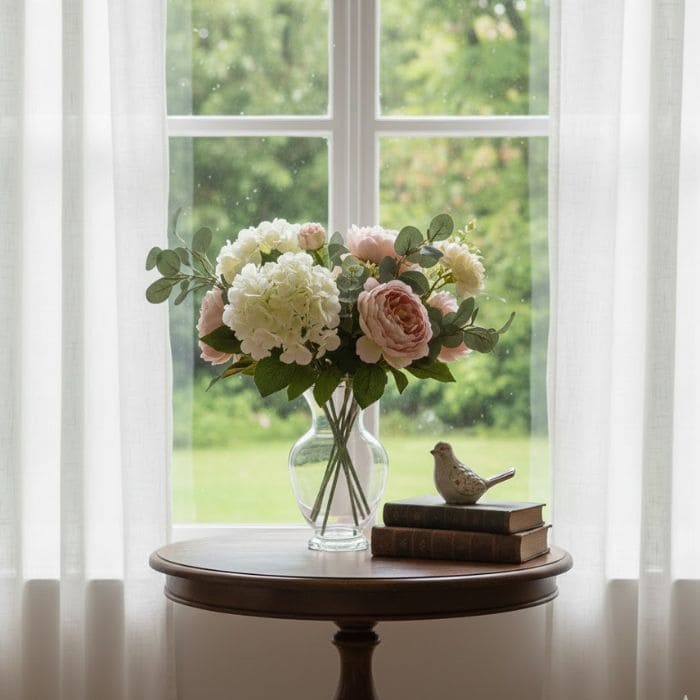
One of my earliest mistakes was choosing flowers based on how pretty they looked in the store rather than how well they fit in the house.
Stores have bright lighting that makes every color pop, but once you bring those bold shades home, they often look too strong or too foreign.
I learned to choose softer, muted tones like blush pinks, creamy whites, gentle greens. A florist once told me, “If the color looks impossible in nature, it will look impossible in your living room too.” That stuck with me.
2. Mix Textures to Avoid the Flat Look
Real flowers don’t match each other perfectly. Some petals are velvety, others are smooth, some leaves are matte, others are slightly glossy.
When I first started decorating, I bought sets that were too uniform. They looked fake even from across the room.
Now I always mix textures. A small spray of baby’s breath beside fuller roses, thin greenery beside leaves.
3. Shape Every Stem Before Placing It in a Vase
This is something I wish I understood from the beginning. Faux stems come straight and stiff, and if you place them in a vase without bending them, the whole arrangement looks rigid.
I take time bending each stem gently, creating curves and slight angles that mimic the way flowers grow toward light. Sometimes I spread petals apart with my fingers or adjust the leaves so they don’t all sit in the same direction.
4. Trim the Stems, Even If It Feels Scary
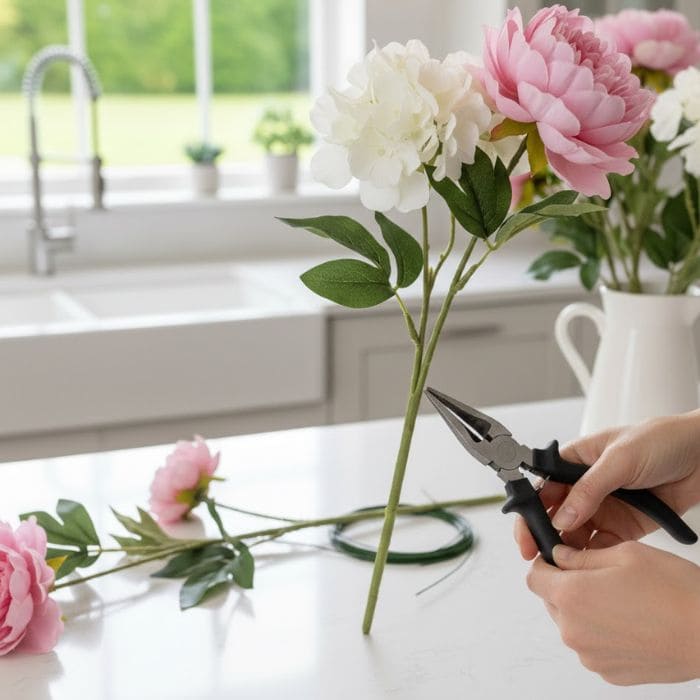
I used to be afraid to cut faux stems because I thought I would ruin them, especially since they cost more than real flowers. But leaving stems too long makes the arrangement feel awkward and top-heavy.
Once I bought a sturdy pair of wire cutters, trimming became easier. I cut stems to match the height of the vase, usually letting the flowers sit about one-third above the rim. This proportion creates a balanced, natural look.
5. Mix Real Branches With Faux Blooms
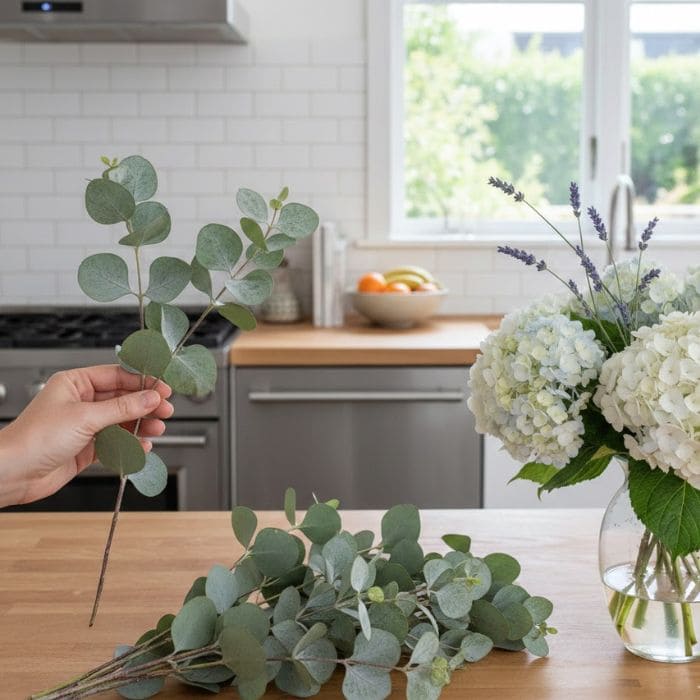
One year during autumn, I added a few real eucalyptus branches to a faux bouquet, and suddenly the entire arrangement looked real. The florist I mentioned earlier told me this trick: “Let at least one piece breathe for the whole arrangement.”
It’s true. Even a single real branch gives life to faux stems. It adds movement, scent, and a small imperfection that fools the eye.
6. Dust More Often Than You Expect
The only downside to faux flowers is dust. I once ignored an arrangement for too long and wondered why it suddenly looked dull and lifeless. Dust settles quickly, especially on textured petals.
Now I dust my arrangements once a week with a soft cloth or a cool blow-dryer setting. Clean petals catch the light better, and the bouquet instantly looks brighter.
7. Match the Vase to the Mood, Not the Color of the Flowers
Gradually, I learned that the vase matters almost as much as the flowers. A clear vase works for delicate stems, but for fuller bouquets, ceramic or clay pieces look more grounded. Glass exposes stiff stems, while opaque vases let the blooms take the spotlight.
I also realized that the vase should match the feeling of the arrangement – airy, grounded, vintage, or modern. Once that mood is right, everything else falls into place.
8. Use Odd Numbers to Keep the Arrangement Natural
Real gardens don’t grow in even lines, and bouquets rarely look balanced when everything is paired. Grouping stems in threes or fives creates movement and softness.
When I arrange a medium bouquet, I often start with three main blooms, add five smaller blossoms, and finish with a scatter of airy greenery. Somehow, this always feels just right.
9. Secure Stems to Avoid the Floating Look
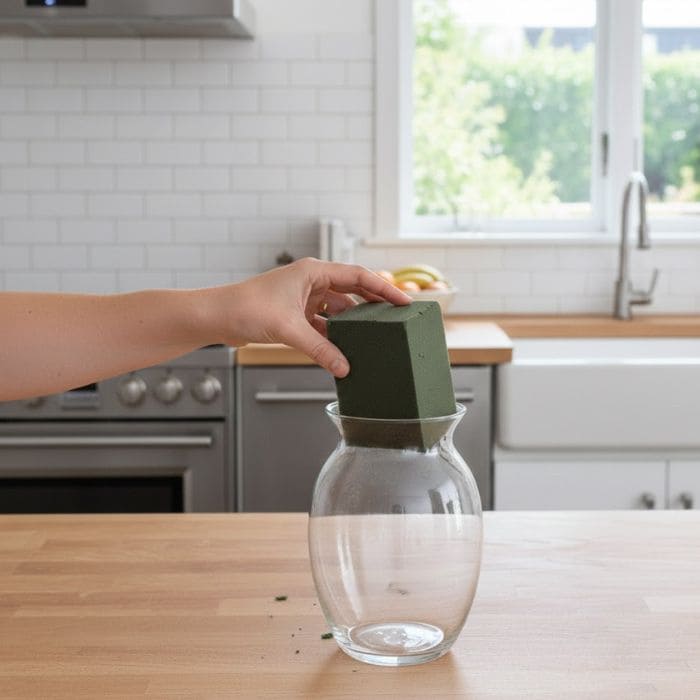
Tall stems tend to lean or twist inside a vase. I used to rearrange constantly until I learned to place a few strips of floral tape across the top of the vase in a grid pattern. This holds each stem where I want it without making the bouquet look stiff.
In deeper vases, I use a small piece of floral foam. It keeps everything steady, even if the vase gets bumped by kids or wandering pets.
10. Keep Seasonal Flowers Truly Seasonal
This tip changed the way my home feels. I once displayed peonies in October and wondered why the room felt off. It wasn’t the flowers, it was the timing. The mind expects certain blooms at certain times of the year.
Now I store faux flowers in labeled bins:
- spring blossoms
- summer greens
- autumn stems
- winter whites and soft branches
When I decorate seasonally, the whole home feels more grounded and natural.
11. Place Arrangements Where Real Flowers Would Thrive
Flowers belong near light, even faux ones. When I put faux arrangements near windows, bright corners, or open shelves, they look believable. When they sit near electronics or dark nooks, they look out of place.
This one rule alone can make a bouquet go from looking artificial to looking fresh.
12. Repair Instead of Replacing
Through the years, I’ve faced bent petals, loose stems, and frayed leaves. I used to throw them away, but now I trim uneven edges, reattach loose leaves with a dab of glue, or warm bent petals with a hair dryer until they soften back into shape.
Most faux flowers can last years if cared for gently. Many of mine have stayed with me through several homes and seasons.