How to Use Scented Candles the Right Way
I sometimes wonder whether my readers get tired of me mentioning scented candles, because I truly talk about them so often that they’ve become a thread running through most of my home stories. But after nearly thirty years of burning them through seasons of joy, stress, change, and quiet rebuilding, I can honestly say that…
I sometimes wonder whether my readers get tired of me mentioning scented candles, because I truly talk about them so often that they’ve become a thread running through most of my home stories.
But after nearly thirty years of burning them through seasons of joy, stress, change, and quiet rebuilding, I can honestly say that scented candles have shaped the way I experience my home.
They soften difficult days, make ordinary mornings feel intentional, and provide the kind of comfort that settles slowly instead of all at once.
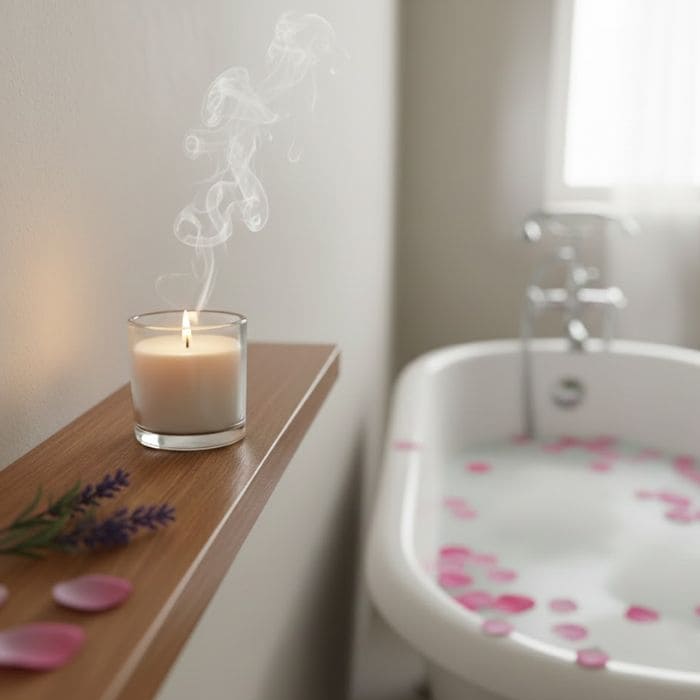
Right now, in our home, there are at least three candles burning or waiting to be lit including one near the mantel, one in the hallway where the air tends to feel cool, and another on the bathroom shelf where the pink walls glow even warmer under candlelight.
Because I’ve made many mistakes and learned many lessons, I wanted this blog to feel like a conversation with beginners, the kind I wish I had years ago.
1. Choosing the Right Candle (Not the Prettiest One)
Many beginners choose candles based on how beautiful the jar looks or how trendy the packaging feels, and while design certainly matters, the quality of the wax and wick is far more important.
When I was younger I bought a candle solely because the label had gold foil accents and looked expensive. The candle burned for an hour before tunneling straight down the middle, leaving wax clinging to the sides like thick walls. It barely released any scent and died long before it should have.
Now, I always suggest looking for candles made of soy, coconut, or beeswax, because they burn cleaner, slower, and more evenly than paraffin. Wooden wicks create a soft crackle that feels cozy, while cotton wicks produce a steadier flame.
And here are brands I’ve loved for years, with honest advantages and disadvantages shared by my real using process, not for advertising, but so readers have something concrete to imagine:
- Yankee Candle
- Advantages: strong throw, long burn time, classic scents that remind many users of childhood
- Disadvantages: some people experience headaches from the intensity; paraffin-based, so not ideal for those wanting a cleaner burn
- Bath & Body Works 3-Wick Candles
- Advantages: excellent scent throw, wide seasonal collections, beautiful jar designs
- Disadvantages: burns quickly because of three wicks; some jars produce soot if not trimmed carefully
- WoodWick by Yankee Candle
- Advantages: wooden wick creates a calming crackle; even burn; warm cozy scents
- Disadvantages: flame can get tall if wick isn’t trimmed; some scents are lighter than expected
- Target’s Threshold and Hearth & Hand by Joanna Gaines
- Advantages: affordable, clean style, soy blends burn more evenly
- Disadvantages: scent throw varies by fragrance; some users say small rooms work better than large ones
- Capri Blue (the famous Volcano scent)
- Advantages: fills large spaces easily; soy-blend wax burns slower
- Disadvantages: more expensive than everyday candles; fragrance might be too overwhelming for small bathrooms
2. Trimming the Wick (The Ritual That Makes Everything Better)
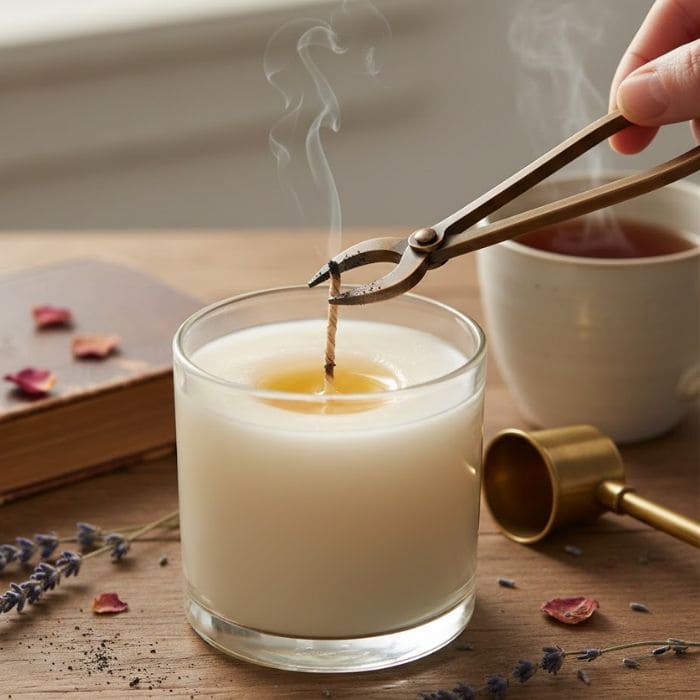
If there is a single habit that determines whether your candle burns beautifully or poorly, it is trimming the wick.
I trim mine to ⅛-¼ inch every single time because an untrimmed wick creates a flame that grows too wild, heats the wax unevenly, and causes the jar to blacken with soot.
A counselor once told me trimming the wick is like lowering the volume on your mind before lighting the candle, meaning that the ritual itself helps you settle.
I didn’t understand it at first, but now I find peace in the small action. Never skip the trim, no matter how rushed you feel. The candle will reward you with a longer lifespan and a cleaner burn.
3. Setting the Candle Memory
Beginners often misunderstand candle memory, but it determines whether your candle tunnels, wastes wax, and burns incorrectly.
When you light a candle for the first time, keep it burning until the melted pool reaches the edges of the jar. This usually takes 2-3 hours for an average 3-inch diameter candle and longer for wider jars.
Letting the top layer melt fully teaches the candle to burn evenly every time afterward. If you blow it out too early, you trap the candle in a narrow tunnel that it will never escape.
4. Avoid Drafts and High-Traffic Areas
Candles behave best when the air is still. Drafts from windows, overhead fans, vents, or frequently opened doors can tilt the flame, causing uneven burn patterns and excessive soot.
My favorite spots are corners protected from airflow like the living-room mantel, the coffee table tray, or the low wooden shelf in the bathroom where the flame stays steady and soft.
Stability helps the candle burn slowly, release fragrance consistently, and avoid unnecessary smoke.
5. Choosing the Right Candle for the Room, the Season, and Even the Time of Day
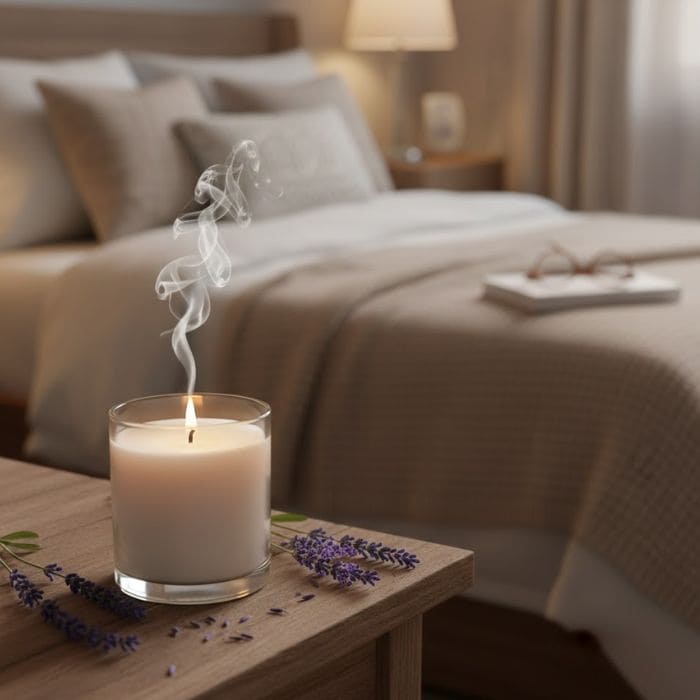
A candle that smells heavenly in a large living room can feel suffocating in a small bathroom, and a gentle floral that adds softness to a bedroom might disappear entirely in a spacious kitchen.
When I choose a candle for a specific room, I first imagine how much air the fragrance needs to move through.
In small spaces such as the bathroom or laundry room, I tend to reach for something light and airy such as lavender, soft citrus, linen, or mild eucalyptus scents (about 4 oz) that fill the room gently without pressing against the walls.
Bedrooms and mid-sized living areas do well with warmer notes like vanilla, light woods, or soft berry blends, while large shared spaces can handle deeper fragrances like amber, sandalwood, cedarwood, or rich gourmand blends that linger beautifully even with open floor plans.

Season also shapes how scent behaves. Winter needs warmth the way the body needs a blanket, so I naturally gravitate toward candles with cozy notes like pine, cinnamon, clove, smoky vanilla, amber, or anything that feels like it carries its own glow. These fragrances make a room feel grounded, almost like the walls are leaning in closer to protect you from the cold.
When spring arrives, however, those heavy scents feel too rich, so I shift to fragrances that mimic the season’s gentle awakening like rainwater, jasmine, mint, fresh herbs, and florals that feel like they were picked from a morning garden.
Summer asks for lightness and air: beachy notes, coconut, bright citrus, or even quiet linen scents that help the home feel calm despite the heat.
And fall, of course, is its own season of comfort with warm apple blends, pumpkin spices, woody scents, or anything that hints at toasted sugar or crisp evenings.
Time of day matters just as much as season. In the early morning, when the house is waking slowly and my mind still feels fogged, I gravitate toward eucalyptus, lemon, mint, or soft citrus scents that lift my energy without overwhelming me.
Afternoon calls for herbal blends, vanilla, or gentle tea fragrances, scents that steady the day and pair well with the slower pace that settles around lunchtime.
Evening is when I allow deeper scents into the home: amber, sandalwood, cedar, smoky tonka, or warm vanilla blends that encourage the whole house to exhale and settle down. And late at night, if I light a candle at all, I usually choose lavender or chamomile.
6. Snuff, Don’t Blow And Protect Your Wooden Surfaces
I never blow out my candles anymore because it creates a harsh smoky scent that lingers in the room. Instead, I use a snuffer or dip the wick gently into the melted wax, which produces a clean, soot-free extinguish.
Many years ago, I placed a candle directly onto a wooden shelf without a coaster. After two evenings of burning, I noticed a faint ring carved into the wood. It never fully disappeared, no matter how many times I polished.
Now, I always place candles on ceramic plates, marble tiles, or dedicated trays. It protects my surfaces and makes the candle arrangement look more intentional.
7. Using Candles as Part of Your Decor
Candles can anchor a vignette beautifully. I often style a candle on a small tray with a plant cutting, a tiny stack of books, or a piece of driftwood the girls found at the beach.
But I also leave open space around the candle for airflow, at least 4 inches because crowding décor can affect the burn.
8. The Truth About Candles and Odors
Many beginners believe scented candles can hide unpleasant smells, but candles work best in a neutral-smelling room. If the air already feels stale, no candle will completely mask it.
I always open a window for a few minutes or spray a linen mist before lighting a candle. This clears the air and allows the fragrance to bloom naturally instead of competing with other smells.
9. Scented Candles Are More Than Decoration to Me
A candle’s fragrance wraps itself into your memories.
The lavender candle I light during the girls’ bedtime reminds me of when they were babies. The amber candle I burn during December carries traces of my mother’s winter baking. The soft vanilla I keep in the bathroom softens the pink light and reminds me that even small rooms deserve care.
Scented candles have become an emotional language in my home, one that marks seasons, comforts me during anxious moments, and celebrates quiet joys.
And after thirty years of burning them, I still feel the same small thrill each time I light one.