I Made a DIY Tabletop Fire Bowl Successfully And You Can, Too
Winter has a way of bringing the family closer, not just physically because we all gather around the warmest corners of the house, but emotionally too. Something about the early sunsets, the quiet evenings, and the need for comfort makes us look for rituals that remind us of togetherness. Last year, as December settled in…
Winter has a way of bringing the family closer, not just physically because we all gather around the warmest corners of the house, but emotionally too. Something about the early sunsets, the quiet evenings, and the need for comfort makes us look for rituals that remind us of togetherness.
Last year, as December settled in and we found ourselves craving a little glow that wasn’t from a lamp or a candle, I started thinking about a fire feature, something small enough to place on our table, safe enough to use indoors with caution, and warm enough to make the living room feel like a soft retreat from the cold.
I had seen several versions online, but most were either too decorative to feel real or too complicated to bring into a family home.
I wanted a simple bowl that would bring a little magic to winter evenings without overwhelming the room. So, like most of my projects, I gathered what I had, asked Daniel to help me with the measurements, and decided I would build one myself.
What You Need to Make a Tabletop Fire Bowl
Before sharing the story of how ours transformed our winter nights, here is everything I used, down to the sizes and materials, because I know how helpful details can be for those who want to recreate it:
- A heat-resistant cement bowl, about 10 inches wide and 4 inches deep (I used one from our garden shed, originally meant for succulents.)
- Fire-resistant rocks or lava stones, rinsed and dried
- A small stainless-steel alcohol canister or fuel cup, around 3.5 inches in diameter
- Rubbing alcohol (91%) or clean-burning gel fuel
- Sandpaper (medium grit) to smooth the rim
- Long lighter or matches
- Metal tongs for adjusting stones
- A heat-proof tray or ceramic plate for stability and surface protection
Here’s Step by Step to Make My Tabletop Fire Bowl
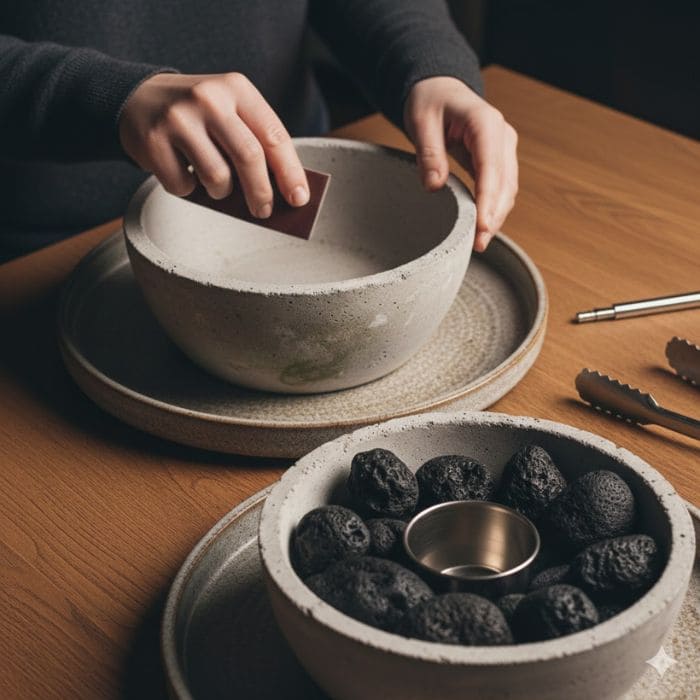
The bowl I used had been sitting outside for a long time, so the first thing I did was clean it thoroughly with warm water and scrub the inside gently.
When it dried, I noticed the rim was slightly rough, so I used sandpaper to smooth the edges until they felt safe to handle, especially since the girls often like to help decorate the table.
Inside the bowl, I placed the stainless-steel fuel cup right in the center. To keep it steady, I layered a thin base of small stones around the cup before adding the larger lava rocks on top. This helped the cup stay level and made the flames rise evenly when lit.
The arrangement of the rocks mattered more than I expected as too many stones would smother the flame; too few would leave the cup exposed in a way that didn’t feel beautiful.
After a few rearrangements, I found a balance, the rocks hugged the fuel cup gently, creating the illusion that the flame would rise from the stones themselves.
Once the bowl was ready, I set it on a wide ceramic tray that matched the living-room decor. This was not only decorative, but a safety measure. A stable base protects wooden surfaces from heat and gives peace of mind during long winter evenings.
Lighting It for the First Time
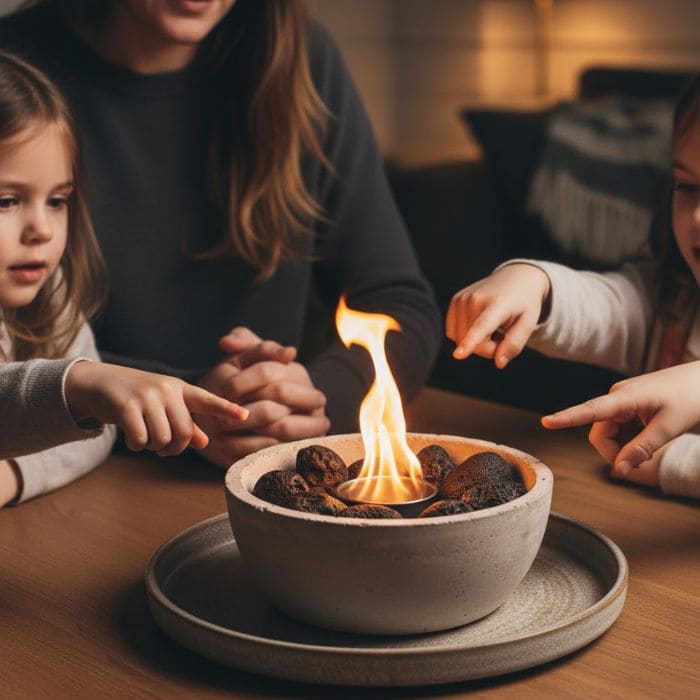
The first time we lit the bowl, it was a chilly evening in January. The girls were coloring at the coffee table, Daniel was reading near the mantel, and I felt that simple need for a moment of warmth that wasn’t just another blanket.
We dimmed the lights, poured a small amount of alcohol into the fuel cup, and used a long lighter to ignite it.
The flame rose gently. The sound was quiet, almost like a whisper, and I remember thinking that this tiny bowl was giving us a moment of intimacy that larger fire features often miss.
My Favorite Winter Memories With S’mores
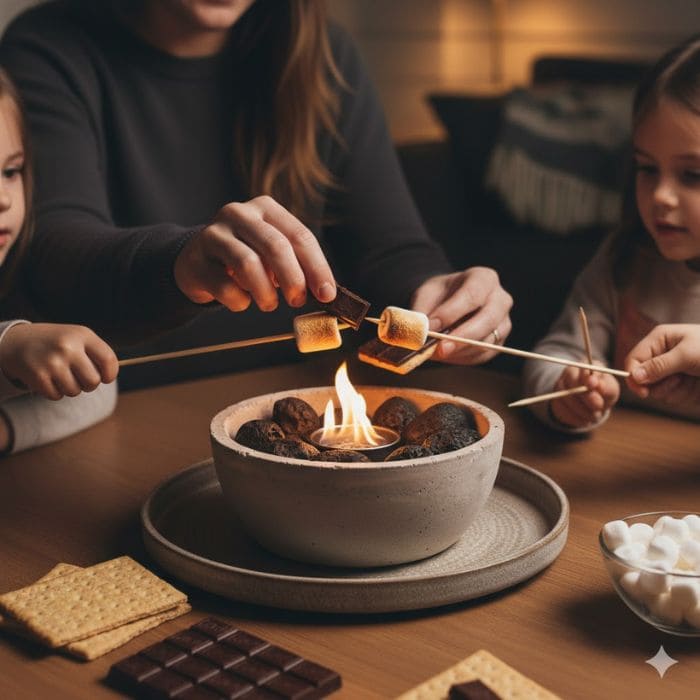
Naturally, after a few weeks of using the fire bowl in the evenings, the girls began asking, “Can we make s’mores?” And I suppose the answer was inevitable.
We gathered long skewers, sat around the coffee table, and roasted tiny marshmallows over the flame.
Because the bowl is small, the process is slow, which turned out to be the sweetest part. The girls took turns carefully, Daniel held Milo back when he tried to sniff the marshmallows, and we all laughed as the chocolate melted too quickly on warm graham crackers.
We Also Decorated Around the Fire Bowl
Once it became a staple in our winter routine, I began styling the table around it. Last year, I placed the bowl on a white marble tray with a ring of eucalyptus around the edges.
On other nights, I used pinecones collected from a walk the girls took with Daniel, setting them near the tray but never too close to the heat.
Sometimes I placed the bowl on the mantel, surrounded by winter greenery and a few faux berries to create a soft holiday vignette.
What I Learned From Using It All Season
The tabletop fire bowl quickly became one of the most comforting parts of our winter home. It gave us a reason to gather more intentionally, a source of warmth that wasn’t overwhelming, and a ritual that softened the evenings when the sky felt oppressively dark.
If you are planning to make the same one, remember these in mind:
- Always use clean-burning fuel as rubbing alcohol is fine for occasional use, but gel fuel burns longer and steadier.
- Never overfill the fuel cup; a small amount creates a surprisingly generous flame.
- Keep the bowl away from curtains, papers, or low-hanging decor.
- Extinguish by covering the fuel cup, not by blowing because blowing can spread embers and cause uneven burns.
- Let the bowl cool completely before moving it.
Would I Recommend Making One? Absolutely
If you’ve ever wanted a small fire feature that brings presence to a room, something that invites your family to sit closer and slow down, a DIY tabletop fire bowl is truly worth the effort.
It costs little, uses materials many people already have, and creates a memory each time the flame rises.