The Door That Always Caught the Sun
The west-facing door in my house has always been impossible to ignore. Every afternoon, especially from late spring through early fall, sunlight pours straight through it. Not the soft kind of light that gently fills a room, but bold, direct light that lands exactly where you stand when you come home. For years, that door…
The west-facing door in my house has always been impossible to ignore. Every afternoon, especially from late spring through early fall, sunlight pours straight through it.
Not the soft kind of light that gently fills a room, but bold, direct light that lands exactly where you stand when you come home. For years, that door was just clear glass. Practical, bright, and honestly a little too honest about how intense the sun can be.
I used to squint every time I walked past it around four or five in the afternoon.
The handle would be warm. The floor near the entryway slowly lightened from constant exposure. The light was beautiful, but it felt unmanaged, like it didn’t know where to rest.
One day, standing there with a cup of tea and shielding my eyes with my hand, I realized the problem was the way it entered my home.
Why I Chose the West Door
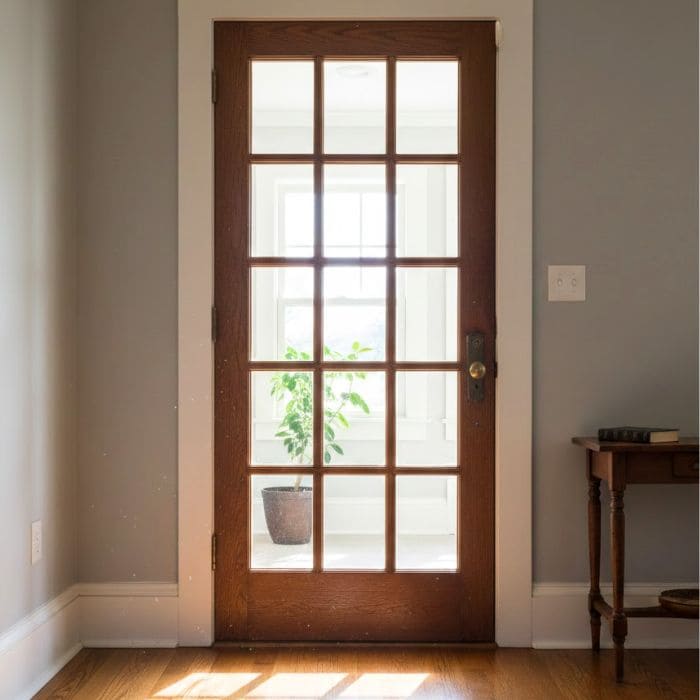
I didn’t randomly choose that door for decoration. It made sense in a very practical way. The west side of my house receives the strongest, lowest-angle sunlight of the day.
Morning light is gentle and forgiving, whereas afternoon light is dramatic. It stretches, lingers, and insists on being noticed.
Curtains felt wrong. They would block the light completely, and I didn’t want to lose it. Frosted film crossed my mind, but it felt lifeless, like muting a song instead of changing the melody.
Planning Something I’d Never Done Before
I had never installed stained glass in my life. I had admired it in old houses, cafés, and historic buildings, but it always felt like something belonging to other people’s homes. Still, the more I thought about it, the more it felt right.
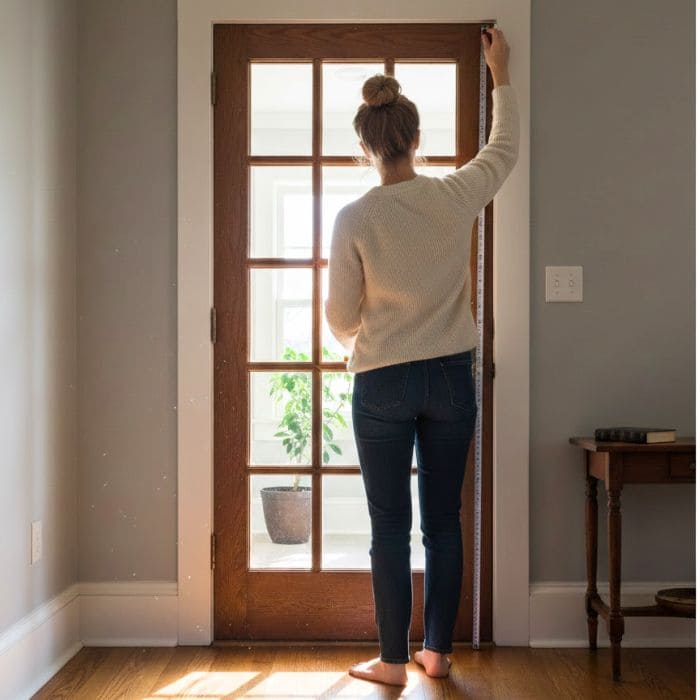
I started with measurements. The glass panel in the door was a simple rectangle, about 68 centimeters wide and 140 centimeters tall. I measured it twice, then once more the next morning, just to be sure.
I wrote everything down, including the depth of the frame, because I knew thickness would matter.
Design took longer than anything else. I didn’t want something overly decorative or heavy, as well as no sharp lines, no busy patterns. So I kept coming back to shapes inspired by plants with soft curves.
For colors, I looked outside instead of online. The dusty green of leaves in late summer. Pale blue that reminded me of early evening sky. Warm amber tones pulled straight from the sun itself.
There was one deeper honey-yellow piece I almost removed at the last minute, worried it might be too much, but I left it in. That piece ended up becoming my favorite.
Installation Day, Slowly and Carefully
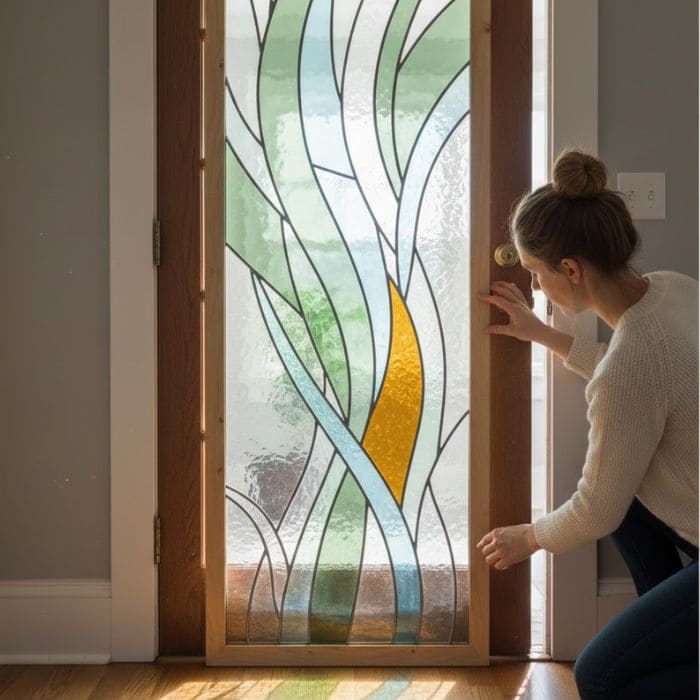
When the stained glass panel was ready, I picked it up from a small local workshop. It was heavier than I expected, wrapped in layers of cardboard and newspaper. I carried it home like it was fragile in a way beyond glass, like it held an idea that could break if I rushed.
Removing the old glass revealed more than I expected. The door frame showed small imperfections, tiny marks from years of use, slightly uneven wood that told me this door had lived a full life before me.
Also, I labeled every screw and hinge because I know how easily small things become mysteries later.
The stained glass panel weighed around 5.5 kilograms and was slightly thicker than the original glass. I had to add a thin wooden spacer, about 4 millimeters, to make it sit securely without pressure.
That detail mattered more than I thought. Too tight and temperature changes could cause cracks. Too loose and the glass would move every time the door closed.
Watching the Light Change Everything
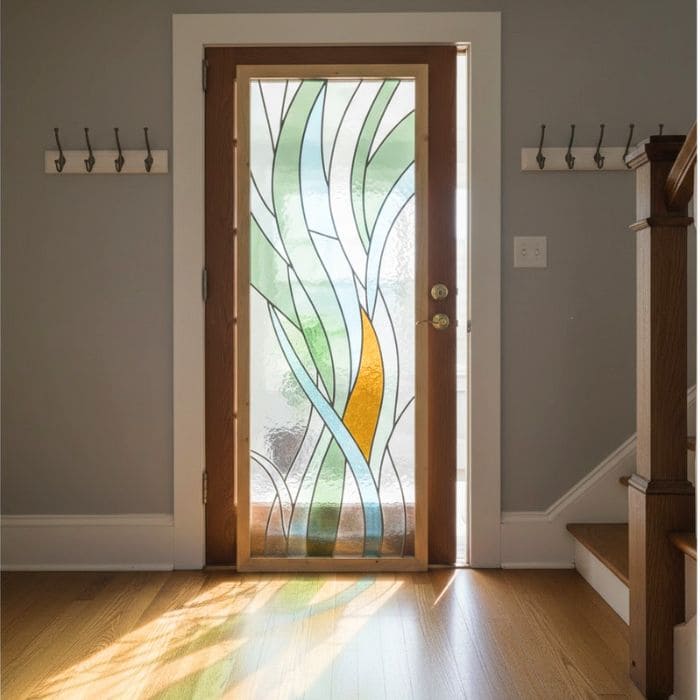
Around five-fifteen, the west light did what it always does and hit the door directly. But this time, it didn’t flood the room. It transformed.
The sunlight broke into color as it passed through the glass. Amber spilled across the floor like warm syrup and soft green climbed the wall near the coat hooks. A faint wash of blue reached the edge of the stairs, subtle but unmistakable.
The entryway felt different instantly. What surprised me most wasn’t how it looked, but how it felt.
The space seemed quieter, even though nothing else had changed. The light slowed down, stretched out, and settled instead of rushing in.