The Drum That Waited Quietly in my Shed
The drum had been in the shed for so long that I almost stopped seeing it as something separate from the space itself. It leaned against the wooden wall, half-shadowed, its red surface dulled by dust and time, never damaged enough to throw away and never useful enough to bring back inside. It was simply…
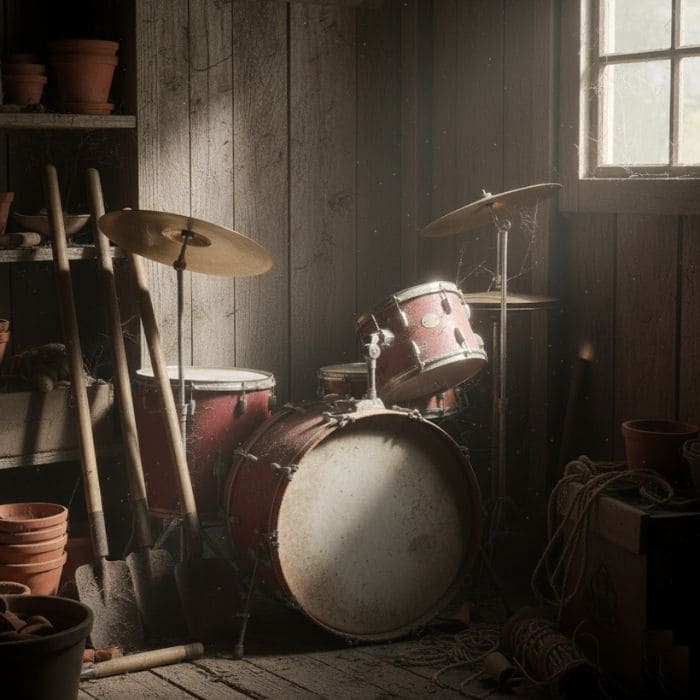
The drum had been in the shed for so long that I almost stopped seeing it as something separate from the space itself.
It leaned against the wooden wall, half-shadowed, its red surface dulled by dust and time, never damaged enough to throw away and never useful enough to bring back inside. It was simply there, quietly existing, holding years without asking anything from me.
Yesterday, I went into the shed for a very ordinary reason. A curtain in the living room kept brushing against the window whenever the afternoon breeze came through, and I wanted to tie it back gently instead of forcing it into place.
I saw a small rope somewhere, thin and soft, the kind you keep because it might be useful one day. As I searched through an old crate and pulled that rope free, my eyes landed on the drum again, and this time it felt different.
The Drum My Father Chose for Me
That drum carries a very specific memory, one I don’t often think about but never really forget.
When I was around eight years old, my father took me to a small music shop near the town center, the kind of place that felt crowded in the best way, with instruments stacked closely together and the faint smell of wood, metal, and old paper lingering in the air.
The drum sat low on a shelf, clearly meant for children, but to me it looked serious and important.
It was a junior snare drum, about thirty centimeters across, with a red lacquered shell that reflected light softly and chrome rims that felt cold and exciting when I touched them.
It wasn’t a famous or professional brand, but the logo printed on the side felt permanent, as if it marked the beginning of something meaningful.
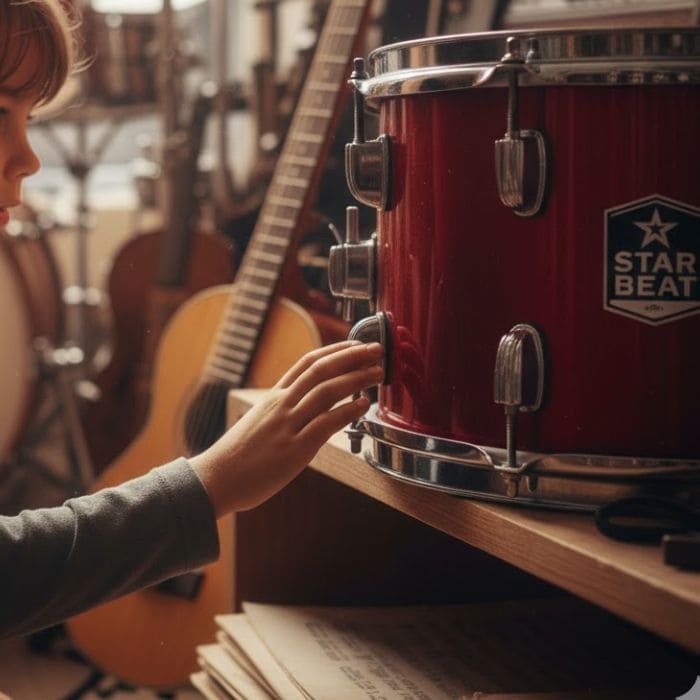
My father didn’t rush me. He let me tap it lightly with my fingers, listening to the sound, watching my face more than the drum itself. When we brought it home, I carried it carefully, already treating it like something I was responsible for.
I played that drum constantly until I was fifteen. I played along with music, invented rhythms of my own, and filled my room with sound that probably tested everyone’s patience at times.
It followed me through childhood, through awkward growing years, through moments when music felt like the easiest way to express energy and emotion without words.
Then, without a clear decision, it slowly disappeared from my daily life. School became heavier, priorities shifted, and one day the drum moved out of my room and into storage.
Seeing the Drum With New Eyes
Standing in the shed yesterday, I wasn’t thinking about playing music again. What came to me instead was a feeling about time, about how the drum had already measured so much of my life without needing numbers or hands.
Its shape felt important. Turning it into a wall clock was truly a good idea.
I carried the drum inside and placed it on the table, noticing details I hadn’t looked at in years. Small scratches from drumsticks, tiny marks that only appear when the light hits just right, signs of use rather than damage.
Turning Sound Into Time
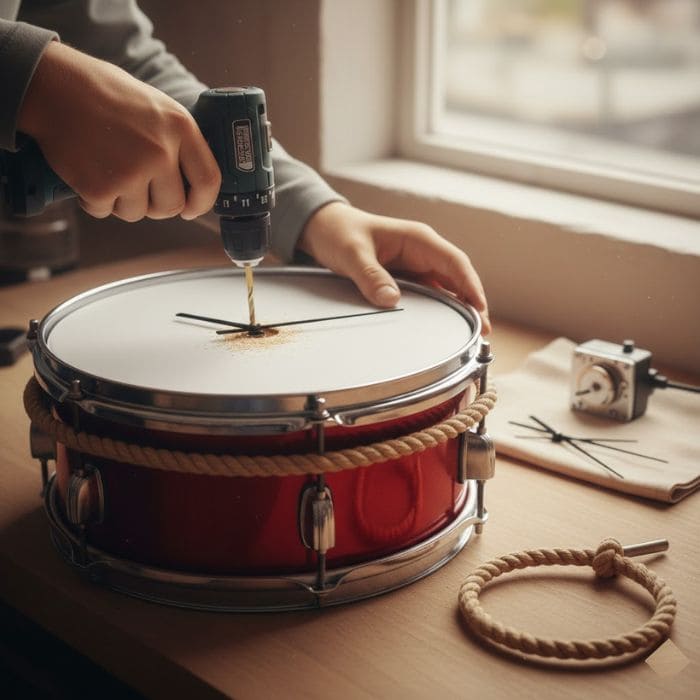
I chose a silent quartz clock mechanism, knowing that a ticking sound would feel wrong, almost disrespectful, replacing rhythm with something anxious and mechanical.
The clock hands were thin and matte black, subtle enough to blend in rather than demand attention.
I measured the center carefully and drilled a small, precise hole just wide enough for the mechanism to pass through. I worked slowly, with a strange sense of familiarity in my hands, as if they remembered this object even after so many years.
I mounted the mechanism from the back so the front of the drum stayed clean and recognizable, without numbers or extra decoration. The drum already knew how to speak for itself.
For hanging, I used the same rope I had gone to the shed for in the first place.
I tied it securely around the rim, adjusting the length carefully so the drum would hang flat against the wall without tilting forward. The rope felt right, not perfect or polished, but honest and soft, matching the spirit of the object.
A New Place on the Wall
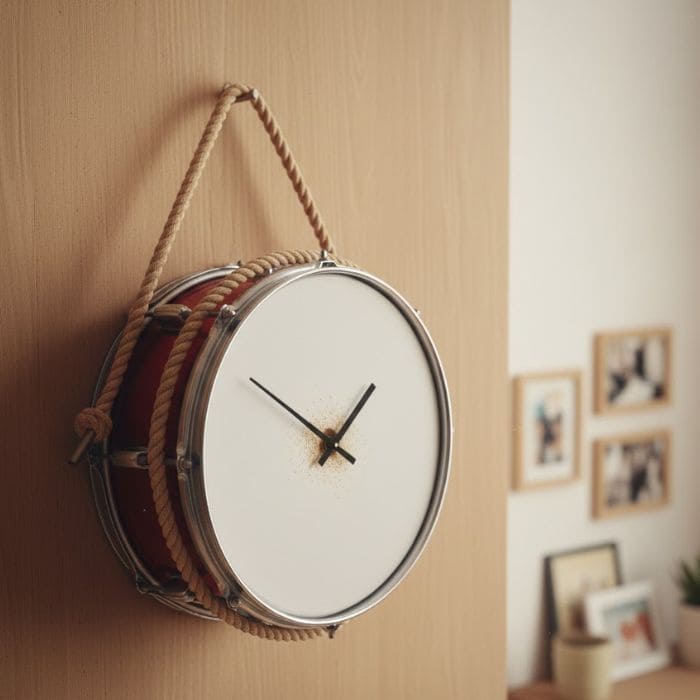
I chose a spot on the wall where the light changes throughout the day, a place I pass often without stopping but always notice.
When I stepped back and looked at it hanging there, I realized it didn’t look like a recycled item or a DIY project.
The drum no longer asked to be played. It marked time quietly and steadily, holding space instead of sound, reminding me of where I came from without pulling me backward into nostalgia.